
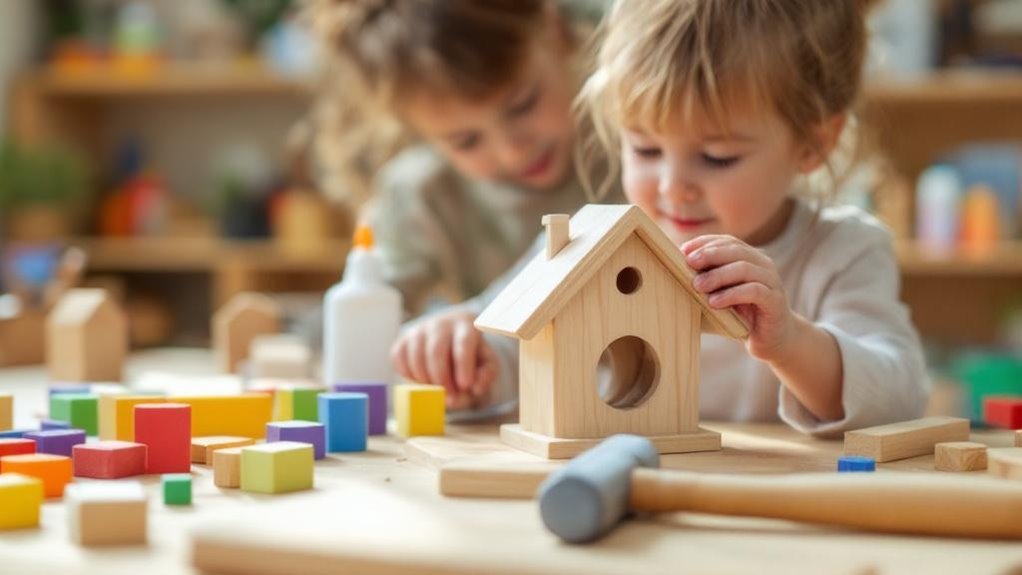
You can start your child with simple projects like birdhouses, pencil caddies, and wooden spatulas that build confidence and fine motor skills. Begin with softwoods like pine and essential tools such as hand drills, hammers, and saws. Always prioritize safety with goggles and gloves while teaching proper technique. These beginner projects take just an afternoon to complete and create something useful or giftable. The skills your child develops—patience, craftsmanship, and accomplishment—extend far beyond the workshop.
Key Takeaways
- Birdhouses and pencil caddies are ideal first projects for younger children in kindergarten through second grade.
- Mobile phone caddies and video game control holsters suit fourth graders developing intermediate woodworking skills.
- Wooden jewelry stands and tablet stands challenge older kids aged five to six with increased complexity.
- Wooden spatulas and chopping boards work for all ages and provide practical, giftable finished items.
- Start with softwoods like pine and pre-cut boards to simplify assembly and build confidence quickly.
Essential Tools Every Young Woodworker Needs
Getting started with woodworking doesn’t require a huge collection of tools—you’ll actually find that five basic hand tools form the foundation of most beginner projects. As a young woodworker, you’ll need a hand drill, hammer, measuring tape, square, and saw to complete most tasks.
Five basic hand tools—a drill, hammer, measuring tape, square, and saw—form the foundation of most beginner woodworking projects.
Adding clamps, screwdrivers, and sandpaper to your essential tools collection enhances both safety and ease of use.
Selecting tools designed for smaller hands makes a significant difference in your comfort and dexterity. You’ll work more confidently when your equipment fits properly.
Don’t overlook safety gear—goggles and gloves are non-negotiable. They protect you while building responsible habits.
Start exclusively with hand tools before exploring power tools later. This approach builds your foundational skills while keeping you safe throughout your woodworking journey.
Safety Tips Every Parent Should Know Before Starting
You’ll want to outfit your child with essential protective gear like safety goggles and gloves before they pick up any tools.
Teaching proper tool handling techniques—like gripping hammers correctly and keeping hands clear of work areas—prevents most common woodworking injuries.
When you model safe practices and enforce them consistently, you’re setting your child up for confident, accident-free projects.
Essential Protective Equipment
Before your child picks up their first tool, it’s essential to outfit them with proper protective equipment. You’ll want to prioritize their safety by investing in the right gear that shields them from common woodworking hazards.
Here’s what you shouldn’t skip:
- Safety goggles protect eyes from flying wood chips and debris during cutting and drilling
- Cut-resistant gloves minimize injury risk when handling sharp tools and operating saws
- Dust masks or respirators reduce wood dust inhalation during sanding and cutting tasks
- Hearing protection like earplugs safeguards against noise damage from power tools
Don’t forget closed-toe shoes either—they protect feet from dropped tools and heavy materials.
When you equip your child with this protective equipment, you’re building confidence and ensuring they can focus on learning woodworking skills safely.
Proper Tool Handling Techniques
Now that your child’s protected from head to toe, it’s time to teach them how to actually use their tools safely. Start by demonstrating the proper grip and handling techniques for each real tool—whether it’s a hammer, saw, or screwdriver.
Show your child how to maintain control and stability, emphasizing that they should always cut away from their body and keep hands clear of moving parts.
Make sure they understand why safety gear matters during easy woodworking projects. Establish firm rules about loose clothing staying tied back and encourage questions whenever they’re unsure.
Practice these techniques together before they work independently. Your supervision and clear instruction transform real tools from potential hazards into instruments for creative success.
Set Up a Kid-Friendly Workshop Space
Creating a dedicated woodworking space that’s tailored to children’s needs makes all the difference in their comfort, safety, and success.
You’ll want to invest in child-sized workbenches and tools so kids can work comfortably without strain or frustration.
Invest in child-sized workbenches and tools to ensure kids work comfortably without strain or frustration.
Build your kid-friendly workshop space around these essentials:
- Use non-toxic finishes and materials throughout your safe environment
- Install proper lighting and ventilation to keep the space bright and fume-free
- Organize tools and supplies in labeled bins or magnetic strips for easy access
- Create separate zones for cutting, assembling, and painting to maintain focus
When you arrange your workshop this way, you’re encouraging independence and responsibility.
Kids gain confidence working in a space designed specifically for them, making woodworking projects more enjoyable and rewarding.
15 Simple Woodworking Projects to Build in an Afternoon
You’ll find that afternoon woodworking projects don’t require fancy tools or expensive materials—just basics like a saw, sandpaper, and wood scraps you probably already have on hand.
Each project offers you a chance to get creative with painting, decorating, or personalizing your finished piece to make it truly yours.
Whether you’re building a monster truck, birdhouse, or wand, these beginner-friendly creations let you accomplish something amazing in just a few hours.
Quick Projects For Beginners
If you’re keen to see results fast, afternoon woodworking projects are perfect for building confidence and skills without requiring days of work.
Quick and easy woodworking projects for kids offer immediate satisfaction while teaching essential techniques.
You’ll find several excellent options using simple hand tools:
- Birdhouse or Pencil Box – Complete these classics in an afternoon with minimal materials
- Monster Truck – Assemble and decorate for quick imaginative play
- Wooden Spatula – Master basic shaping with this straightforward project
- Table Tennis Bat or Magic Wand – Blend creativity with functionality
These beginner-friendly projects require few tools and materials, making them ideal opportunities for creativity.
Your child finishes with a usable creation they’ve proudly made, boosting their confidence and enthusiasm for future woodworking adventures.
Tools And Materials Needed
Before you and your child commence an afternoon woodworking project, gathering the right tools and materials makes the difference between frustration and fun.
You’ll need basic tools like a hammer, saw, measuring tape, and sandpaper for cutting and shaping wood. Stock your workspace with safety gear—goggles and gloves protect young hands and eyes during the build.
For materials, choose softwoods like pine or plywood, which are forgiving for beginners.
Hardware stores stock pre-cut pine boards, wooden dowels, and screws specifically suited for kid-friendly projects. These readily available supplies keep costs low while ensuring quality results.
With these essential tools and materials on hand, you’re ready to tackle engaging projects that deliver satisfaction in just one afternoon.
Creative Design Possibilities
Now that you’ve gathered your tools and materials, it’s time to explore what you and your child can actually build. You’ll find plenty of creative design possibilities within these basic woodworking projects:
- Monster Truck – Complete a fun vehicle design in one afternoon while developing problem-solving skills
- Door Stop – Practice angular cuts and personalize it with paint or decorative ply additions
- Build Your Own Wand – Encourage imagination through straightforward construction and custom decorations
- Wooden Spatula or Spoon – Enhance fine motor skills using simple traced patterns on wood
Each project introduces fundamental techniques without overwhelming beginners.
Your child can customize colors, shapes, and details to reflect their personality. These woodworking projects balance creativity with achievable goals, building confidence while creating something useful or imaginative they’ll treasure.
Choose the Right Project for Your Child’s Age and Skill
Picking the right woodworking project can make all the difference in keeping your child engaged and confident. Consider your child’s age, skill level, and prior experience before selecting age-appropriate projects that’ll challenge them without overwhelming them.
| Age Group | Recommended Projects | Skill Level |
|---|---|---|
| Younger Children (K-2) | Birdhouse, Pencil Caddy | Beginner |
| Grade 4 | Mobile Phone Caddy, Video Game Control Holster | Intermediate |
| Older Kids (5-6+) | Wooden Jewelry Stand, Tablet Stand | Advanced |
| All Ages | Wooden Spatula, Chopping Board | Beginner |
Younger children benefit from simple designs that teach basic techniques. Grade 4 students appreciate tech-related projects that spark creativity. Older kids enjoy complex designs encouraging personal expression. Always assess tool comfort and safety to guarantee woodworking projects remain enjoyable and secure for every child.
What You’ll Learn From Building Wood Projects
When you pick up a hammer and start building, you’re not just creating something useful—you’re developing skills that’ll serve you well beyond the workshop.
Through woodworking, you’ll gain valuable abilities:
- Fine motor skills and hand-eye coordination strengthen as you manipulate tools and materials with precision
- Practical craftsmanship develops through measuring, cutting, and assembling components accurately
- Patience and persistence grow when you tackle challenges and learn from mistakes
- Safety awareness becomes second nature as you handle tools responsibly
A project that lets kids build something tangible—like a birdhouse that’ll connect with nature—gives you real accomplishment. You’ll see your efforts transformed into something useful or giftable.
You’ll also develop accountability through project completion and cleanup. These woodworking skills build genuine confidence and competence that extend far beyond any single project.
Where to Find Plans and Keep Building Confidence
Once you’ve built your first project, you’ll want to keep the momentum going—and the good news is that finding your next woodworking plan doesn’t require much hunting.
You’ll find countless easy wood projects on educational websites offering step-by-step instructions and free downloadable templates designed just for kids like you.
To keep things fresh and exciting, explore local makerspaces or community workshops where instructors provide guidance and personalized project ideas.
Local makerspaces and community workshops offer instructors who provide personalized guidance and fresh project ideas to keep your momentum going.
Instructional books like “Woodshop for Kids” introduce practical techniques and safety measures that build your confidence gradually.
Don’t underestimate the power of sharing your work on forums and blogs.
Showcasing your projects, receiving feedback, and drawing inspiration from other young woodworkers will foster a sense of community.
This support network helps you tackle increasingly challenging projects while celebrating your growing skills.
Frequently Asked Questions
What Are Some Woodworking Projects for Kids?
You can build a birdhouse, create a pencil caddy, carve a wooden spatula, craft a treasure box, or design a phone caddy. Each project teaches you valuable skills while letting you express your creativity and make something useful.
What Are Some Easy Woodworking Projects for Beginners?
You can build a pencil box to learn measurements, craft a birdhouse for basic skills, create wooden spatulas with tracing, make treasure boxes for storage, or fashion door stops with simple cuts.
What Can You Build Out of Wood for Kids?
You can build birdhouses, pencil boxes, phone caddies, treasure boxes, and chopping boards. Like seeds growing into trees, these projects help you develop skills while creating useful items you’ll treasure for years.
What Are Some Simple Building Projects for Kids?
You can build a birdhouse, pencil box, treasure box, picture frame, or wooden planter box. Each project teaches you measuring, cutting, and assembly skills while letting you express your creativity and create something functional you’ll love.
Conclusion
You’re about to unleash your kid’s inner master craftsperson! With the right tools, a safe workspace, and that first project, you’ll watch them transform from total beginners into legitimate woodworking wizards. They’ll build confidence faster than you can say “masterpiece,” creating treasures they’ll proudly display forever. Every project they complete isn’t just a wooden creation—it’s proof they can conquer anything they set their mind to. Now grab those tools and let’s build something incredible!